
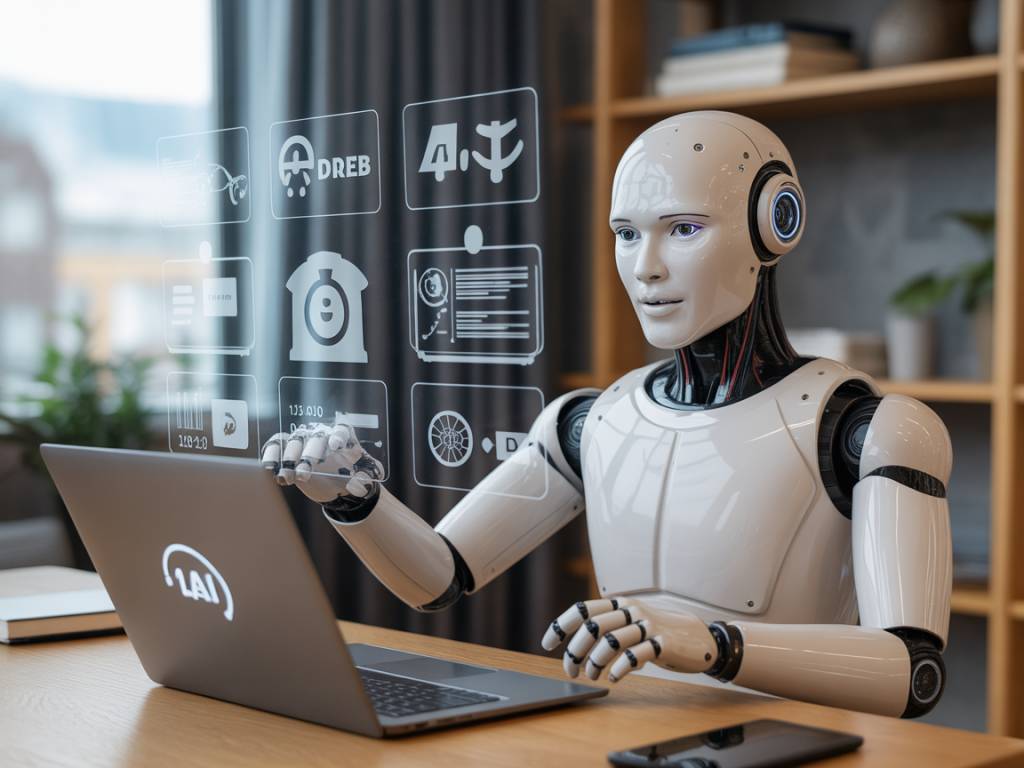
Why AI Agents and Automation Workflows Matter for Digital Marketing in 2026
In 2026, digital marketing is defined by scale, speed and personalization. Traditional marketing automation platforms are no longer enough to stay competitive. Brands now rely on AI agents and automation workflows to coordinate campaigns, optimize creative assets, and respond to customer signals in real time.
AI agents can be described as autonomous, goal-driven systems that use machine learning and large language models to execute marketing tasks with minimal human supervision. When combined with well-designed automation workflows, these agents help marketers orchestrate complex activities across channels such as email, paid media, social media, SEO, and customer support.
For digital marketing teams, the opportunity is twofold: reduce repetitive manual work and massively increase the volume and sophistication of campaigns without increasing headcount. The key question is no longer whether you should use AI, but how to structure your AI-driven marketing stack in a way that is reliable, measurable, and aligned with business objectives.
Understanding AI Agents in a Marketing Context
AI agents in digital marketing are specialized models or systems configured to accomplish specific goals under defined constraints. They do more than generate content; they can make decisions, trigger actions, and collaborate with other systems.
Common types of marketing-focused AI agents in 2026 include:
- Content generation agents that produce blog posts, social posts, ad copy, and landing page variations based on brand guidelines and performance data.
- Media buying agents that adjust bids, audiences, and budgets across platforms like Google Ads, Meta, TikTok, and programmatic networks.
- Customer engagement agents that power chatbots, email sequences, and in-app messages, reacting to user behavior in real time.
- Analytics and insights agents that consolidate data from multiple sources, surface anomalies, and propose optimization actions.
- SEO optimization agents that suggest keywords, meta tags, internal linking and content refreshes based on SERP changes and competitor activity.
These AI agents operate inside or on top of your existing marketing stack. They interact with CRMs, CDPs, ad platforms, email tools, analytics suites, and content management systems through APIs, enabling a level of orchestration that surpasses traditional rule-based automation.
What Are Automation Workflows in 2026?
Automation workflows are the structured sequences of steps that connect your AI agents, tools, and data sources. They determine when an agent should act, on what inputs, under which rules, and what should happen next.
Unlike earlier generations of marketing automation, which relied heavily on simple “if this, then that” logic, 2026 workflows often blend deterministic rules with probabilistic AI decisions. This allows workflows to remain predictable and compliant, while benefiting from the adaptive power of machine learning.
Typical digital marketing automation workflows involve:
- Trigger conditions (user actions, data thresholds, time-based events)
- Data enrichment and segmentation steps
- AI-driven decisions (scoring, routing, personalization)
- Content generation or selection
- Channel-specific execution (email, ads, SMS, push, chat, social)
- Measurement, feedback loops, and model updates
The combination of AI agents and orchestrated workflows is what allows marketing teams to move from one-off campaigns to continuous, adaptive customer journeys.
Key Use Cases: How AI Agents Scale Digital Marketing Operations
To understand how to deploy AI in a practical way, it is useful to look at concrete use cases where AI agents and automation workflows deliver measurable value.
1. Always-On Campaign Optimization
An AI media buying agent can monitor campaign performance across multiple ad platforms every few minutes. Instead of human marketers manually adjusting bids once a day, the agent:
- Analyzes performance data by audience segment, creative, device and placement.
- Shifts budget toward high-ROAS ad sets and pauses underperforming variants.
- Tests new audiences or lookalike segments based on conversion data.
- Cooperates with a creative agent to generate new ad copy or visuals when fatigue is detected.
All of this is coordinated through automation workflows that define guardrails, such as maximum bid levels, total daily spend, and brand safety requirements.
2. Hyper-Personalized Email and Lifecycle Marketing
Email and lifecycle campaigns benefit substantially from AI-driven segmentation and content personalization. A lifecycle AI agent can:
- Score users based on behavior and purchase intent signals.
- Assign contacts to dynamic journeys (onboarding, upsell, win-back, retention).
- Generate tailored subject lines and email bodies for each micro-segment.
- Time sends based on individual engagement patterns rather than static schedules.
The workflow handles events like “user abandoned cart”, “user reached 90 days inactive”, or “user hit a product usage milestone”, and calls the appropriate agent for copy, segmentation, or next-best-action decisions.
3. SEO at Scale
For SEO, AI agents can analyze search trends, competitor content, and ranking changes. A specialized SEO agent may:
- Identify content gaps and propose new topic clusters with relevant keywords.
- Draft optimized outlines or full articles following your brand voice.
- Recommend internal linking structures across existing content.
- Monitor SERP volatility and suggest updates to content that is slipping in rankings.
Automation workflows can then route these recommendations to human editors for approval, publish updated content via the CMS, and track the impact on organic traffic and conversions.
4. Real-Time Customer Support and Sales Enablement
AI agents embedded in chat widgets, messaging apps, and help centers are increasingly capable of handling both support and pre-sales inquiries. When integrated with your CRM and product data:
- They answer common questions instantly, reducing support volume.
- They qualify leads, collect key information, and book meetings for sales teams.
- They surface tailored product recommendations or content resources.
- They escalate complex cases to human agents with context and suggested next steps.
A well-structured automation workflow ensures smooth handoffs, compliance with privacy rules, and consistent logging of all interactions into your data warehouse.
Designing Effective AI-Driven Marketing Workflows
Implementing AI agents and automation workflows in digital marketing requires more than plugging in a new tool. It involves designing a system that balances automation with human oversight, creativity, and ethical considerations.
Several design principles help ensure sustainable performance:
- Start from business objectives such as revenue, customer lifetime value, or lead quality, rather than focusing solely on automation for its own sake.
- Define clear roles for AI agents, specifying what they can decide autonomously and where human approval is mandatory.
- Maintain source-of-truth data via a CDP or data warehouse, so that all agents operate from consistent and up-to-date information.
- Use guardrails such as budget caps, tone-of-voice constraints, and exclusion lists to prevent brand or compliance issues.
- Implement feedback loops where performance data continuously retrains or fine-tunes the AI models.
- Test incrementally, rolling out AI-driven workflows to a subset of traffic or users before full-scale deployment.
Practical Steps to Get Started in 2026
For marketing leaders and teams aiming to integrate AI agents and automation workflows, a phased roadmap is usually more effective than a big-bang approach.
A typical path might look like this:
- Audit your current stack: Map your tools, data flows, and manual processes. Identify where time is lost and where data is underutilized.
- Select priority use cases: Choose 2–3 high-impact areas, such as ad optimization, email personalization, or SEO content production.
- Choose interoperable tools: Favor platforms and AI agents that expose robust APIs and native integrations with your CRM, CMS, and ad platforms.
- Define KPIs and benchmarks: Establish baseline metrics so you can measure the incremental value of AI-driven workflows.
- Build minimum viable workflows: Start with simple triggers and a small set of actions, adding complexity only once initial wins are validated.
- Involve cross-functional stakeholders: Coordinate with legal, IT, sales, and customer support, especially where data privacy and brand risk are involved.
Risks, Ethics, and Governance in AI-Powered Marketing
Scaling digital marketing with AI agents introduces new forms of risk that need structured governance. Beyond performance metrics, teams must consider transparency, fairness, and trust.
Key concerns include:
- Data privacy and compliance: AI workflows must comply with regulations such as GDPR, CCPA and emerging AI-specific laws. Consent management and data minimization are essential.
- Bias and fairness: Targeting and personalization models can inadvertently discriminate against specific groups. Regular audits and bias testing are necessary.
- Brand safety and accuracy: Generative agents may produce off-brand or factually incorrect content if not properly constrained and reviewed.
- Over-automation: Excessive automation can damage customer experience if interactions become robotic, repetitive, or insensitive to context.
To address these issues, many organizations in 2026 define explicit AI usage policies, establish review processes for sensitive campaigns, and maintain human-in-the-loop checkpoints for key decisions.
The Evolving Role of Marketers in an AI-First Era
As AI agents and automation workflows take over repetitive tasks, the role of human marketers continues to evolve. Rather than replacing marketers, AI shifts the focus toward strategy, creative direction, and systems design.
Modern marketers spend more time on:
- Defining customer narratives and brand positioning.
- Selecting and configuring AI tools and agents.
- Interpreting complex data patterns surfaced by analytics agents.
- Ensuring that AI-driven experiences align with brand values and customer expectations.
- Experimenting with new channels, formats, and growth loops enabled by automation.
Teams that embrace this shift can scale their impact significantly, running hundreds of personalized micro-campaigns simultaneously while maintaining strategic control.
Positioning Your Marketing Organization for 2026 and Beyond
AI agents and automation workflows are reshaping digital marketing into a more dynamic, data-driven, and experimental discipline. Brands that invest early in building robust AI infrastructure, clear governance frameworks, and cross-functional skills will be best placed to compete.
The focus is no longer on isolated tools, but on orchestrated systems where agents collaborate across the entire customer journey: from discovery and acquisition to nurturing, conversion, and long-term retention. In this environment, the most valuable assets are high-quality data, clear strategic direction, and teams who know how to harness AI responsibly.
For marketing leaders planning their roadmap for 2026, the priority is to move deliberately: start with focused use cases, design thoughtful workflows, measure impact rigorously, and continuously refine the balance between automation and human judgment. The organizations that master this balance will be able to scale their digital marketing efforts efficiently while maintaining meaningful, relevant connections with their audiences at every touchpoint.