The Rise of AI Marketing Agents in Customer Acquisition
By 2026, AI marketing agents will move from experimental tools to core drivers of customer acquisition strategies. These intelligent systems are rapidly evolving from simple automation scripts into autonomous agents capable of planning, executing, and optimizing multi-channel campaigns with minimal human intervention.
For growth-focused companies, the shift is profound. Customer acquisition has traditionally relied on fragmented tools: ad platforms, email software, CRM systems, analytics dashboards. AI marketing agents promise to connect these silos, acting as always-on digital strategists that test hypotheses, allocate budgets, and personalize outreach at scale.
This transformation is not just a technological upgrade; it is a structural change in how marketing teams operate, prioritize, and measure success in competitive digital markets.
What Are AI Marketing Agents?
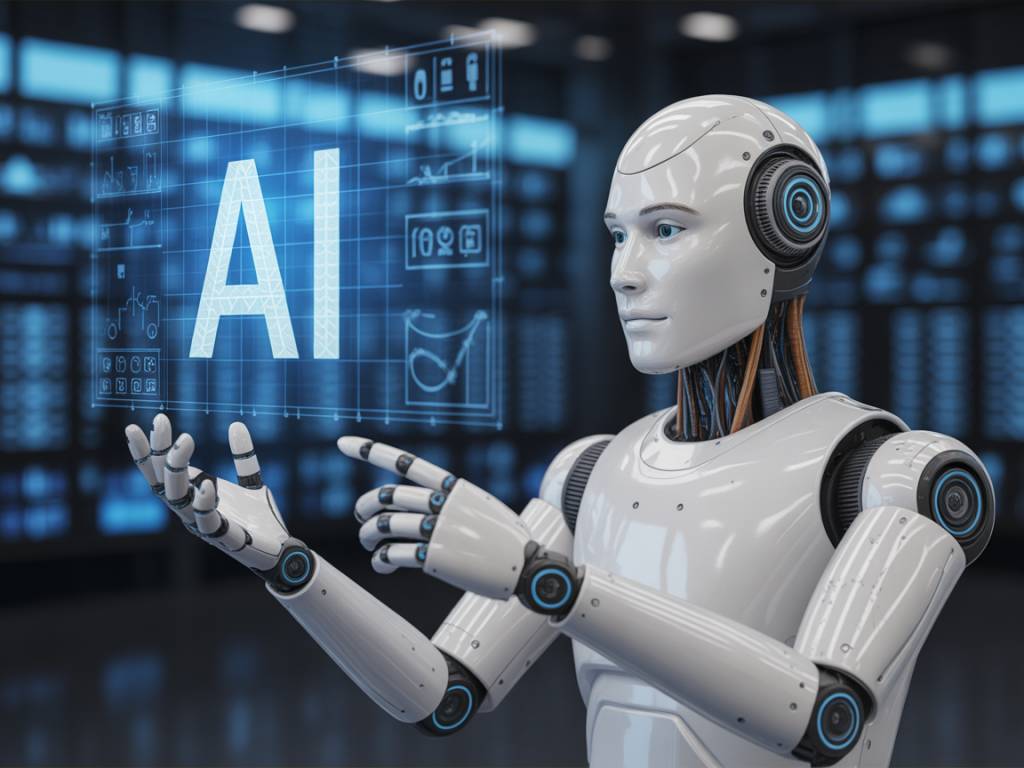
AI marketing agents are software entities powered by advanced machine learning models, often combining large language models (LLMs), predictive analytics, and real-time data processing. Unlike traditional marketing automation, which follows pre-defined if/then rules, AI agents are designed to:
- Understand goals (e.g., reduce acquisition cost, increase qualified leads, improve conversion rate).
- Interpret data from multiple sources (CRM, ad platforms, web analytics, customer support, social media).
- Propose strategies (channel mix, messaging, audience segments, creative variations).
- Execute campaigns autonomously (launch ads, send emails, trigger workflows, adjust budgets).
- Learn from outcomes (A/B tests, cohort performance, funnel analytics) and improve over time.
In 2026, leading companies will deploy entire “swarms” of AI marketing agents, each specializing in a specific part of the acquisition funnel: top-of-funnel awareness, lead qualification, nurturing, or sales enablement.
Key Capabilities That Will Redefine Customer Acquisition
The true impact of AI marketing agents on customer acquisition will come from several converging capabilities that go beyond today’s rule-based automation.
Hyper-Personalized Prospect Journeys
AI agents will build individualized journeys for each prospect, not just segmented workflows. Using behavioral data, intent signals, and real-time interactions, they will tailor:
- Ad creatives and value propositions for micro-segments.
- Landing page copy and layout based on predicted preferences.
- Email sequences that adjust tone, frequency, and offers dynamically.
- On-site experiences, including chat flows and product recommendations.
Instead of sending all leads through the same funnel, AI agents will decide in real time whether a visitor should see an aggressive sales offer, a product comparison, an educational asset, or social proof. This level of personalization will significantly increase conversion rates and reduce wasted acquisition spend.
Autonomous Media Buying and Budget Allocation
Paid acquisition will be one of the earliest domains to feel the full impact of AI marketing agents. While ad platforms already provide automated bidding, AI agents will operate above the platforms, orchestrating cross-channel strategy.
They will:
- Continuously reallocate budgets between search, social, display, and emerging channels based on performance and marginal return.
- Predict when customer acquisition cost (CAC) is likely to spike or drop and adjust bids proactively.
- Run multi-variant creative experiments at massive scale, identifying combinations of messages, visuals, and formats that resonate with each micro-audience.
- Coordinate remarketing and prospecting campaigns so that they reinforce each other instead of competing.
In 2026, successful acquisition leaders will measure their effectiveness not by manual optimization skills, but by how well they define constraints, guardrails, and goals for their AI agents.
Real-Time Lead Scoring and Qualification
One of the persistent challenges in customer acquisition is separating high-intent buyers from casual visitors or low-quality leads. AI marketing agents will address this with near real-time lead scoring powered by behavioral modeling.
Instead of static scoring based on form fields and basic activity, AI agents will assess probability to buy using indicators such as:
- On-site behavior paths and time spent on high-intent pages.
- Cross-device engagement and repeated brand interactions.
- Email engagement patterns that correlate with purchase decisions.
- Historical performance of similar lookalike profiles.
Based on these insights, AI agents will automatically decide whether a lead should:
- Be sent directly to sales with a priority flag.
- Enter an educational nurture sequence.
- Receive a discount or incentive to overcome friction.
- Be deprioritized to avoid wasting human sales capacity.
This dynamic routing will tightly align marketing and sales efforts around revenue potential, not just volume of leads generated.
End-to-End Funnel Optimization
Customer acquisition performance is often limited by siloed optimization: paid media teams optimize click-through rate, content teams optimize time-on-page, and sales teams optimize close rate. AI marketing agents will take a more holistic approach.
By having access to the entire funnel—from impression to closed deal—they will:
- Identify bottlenecks (e.g., strong ad performance but weak landing page conversions) and suggest targeted fixes.
- Attribute value more accurately across touchpoints using probabilistic models rather than last-click attribution.
- Simulate potential changes to the funnel (new pricing, altered onboarding flows, revised CTAs) and forecast impact on CAC and lifetime value (LTV).
- Continuously test different funnel paths for different personas.
In practice, this means acquisition strategies will be judged by their net impact on revenue efficiency, not isolated metrics.
Use Cases Marketers Will Rely On in 2026
By 2026, AI marketing agents will be deeply embedded in day-to-day acquisition workflows. Some practical applications will become standard in high-performing organizations.
- Dynamic content creation at scale – Agents generate and iterate ad copy, landing pages, email sequences, and social posts based on performance data, brand guidelines, and audience insights.
- Always-on experimentation – Instead of a few manual A/B tests per month, AI agents run hundreds of micro-tests across channels, evaluating copy, design, offers, and audience targets.
- Predictive campaign planning – Before launching a major campaign, AI agents simulate outcomes using historical data and market signals, helping marketers choose themes, channels, and timing that maximize acquisition efficiency.
- Conversational acquisition – AI-powered chat and voice agents engage prospects in natural conversations, answer objections, recommend content, and capture qualified lead information without human involvement.
- Churn-aware acquisition – Agents factor in predicted churn when optimizing for new customers, prioritizing segments likely to deliver higher lifetime value rather than just low CAC.
Strategic Advantages for Early Adopters
Organizations that integrate AI marketing agents into their customer acquisition stack by 2026 will gain several strategic benefits over slower competitors.
- Faster learning cycles – With autonomous experimentation and real-time analytics, these companies will shorten the feedback loop between idea and result, allowing them to adapt rapidly to competitive moves and market shifts.
- Lower acquisition costs – Better targeting, smarter media buying, and funnel-wide optimization will systematically reduce wasted spend.
- Stronger alignment with revenue – By optimizing for pipeline quality and LTV, AI agents will help marketing teams demonstrate direct impact on revenue, not just top-of-funnel metrics.
- Scalable personalization – Personalized experiences will no longer be limited to a few priority segments; AI agents will extend this to thousands of micro-audiences without proportional increases in headcount.
Risks, Limitations, and Ethical Considerations
The rise of AI marketing agents also brings new risks for customer acquisition strategies.
- Over-automation – Excessive reliance on AI can lead to tone-deaf messaging, misaligned offers, or brand damage if guardrails and human oversight are weak.
- Data quality issues – AI agents are only as effective as the data they receive. Inaccurate, biased, or incomplete data can distort acquisition strategies and reinforce undesirable patterns.
- Regulatory and privacy constraints – Stricter data protection laws and consent requirements will shape what AI agents can do with behavioral and third-party data.
- Ethical targeting – Hyper-personalization raises questions about manipulation, especially for vulnerable groups. Responsible marketers will need clear guidelines on acceptable use of AI-driven persuasion.
To mitigate these risks, leading organizations will define governance frameworks for AI marketing agents, including approval workflows, monitoring dashboards, and ethical standards.
How Marketing Teams Should Prepare for 2026
Preparing for AI-driven customer acquisition is less about replacing marketers and more about redefining roles and skills. Teams that want to be ready for 2026 can start by:
- Investing in clean, connected data – Unifying CRM, analytics, product usage, and support data into a coherent customer data foundation is essential for effective AI agents.
- Defining clear objectives and constraints – Marketers must be precise about acceptable CAC, target LTV/CAC ratios, brand voice constraints, and compliance requirements.
- Training teams on AI collaboration – Future marketers will specialize in prompting, supervising, and fine-tuning AI agents rather than manually executing every task.
- Running pilot projects – Starting with controlled experiments—such as AI-driven lead scoring or creative testing—allows teams to learn without risking core revenue streams.
By 2026, the most competitive acquisition strategies will emerge from teams that treat AI agents not as black-box tools, but as collaborators that require direction, feedback, and governance.
The Future of Customer Acquisition in an AI-First Landscape
AI marketing agents will not eliminate the need for human marketers. Instead, they will shift the center of gravity in customer acquisition from manual execution to strategic oversight, creative positioning, and ethical decision-making.
As these agents become more capable, acquisition success will depend less on who can press the most buttons and more on who can ask the best questions, define the smartest constraints, and design the most compelling value propositions.
For organizations willing to adapt, 2026 will mark the moment when AI-driven customer acquisition moves from a competitive edge to an operational standard—and those who have not built the necessary capabilities will find it increasingly difficult to catch up.