
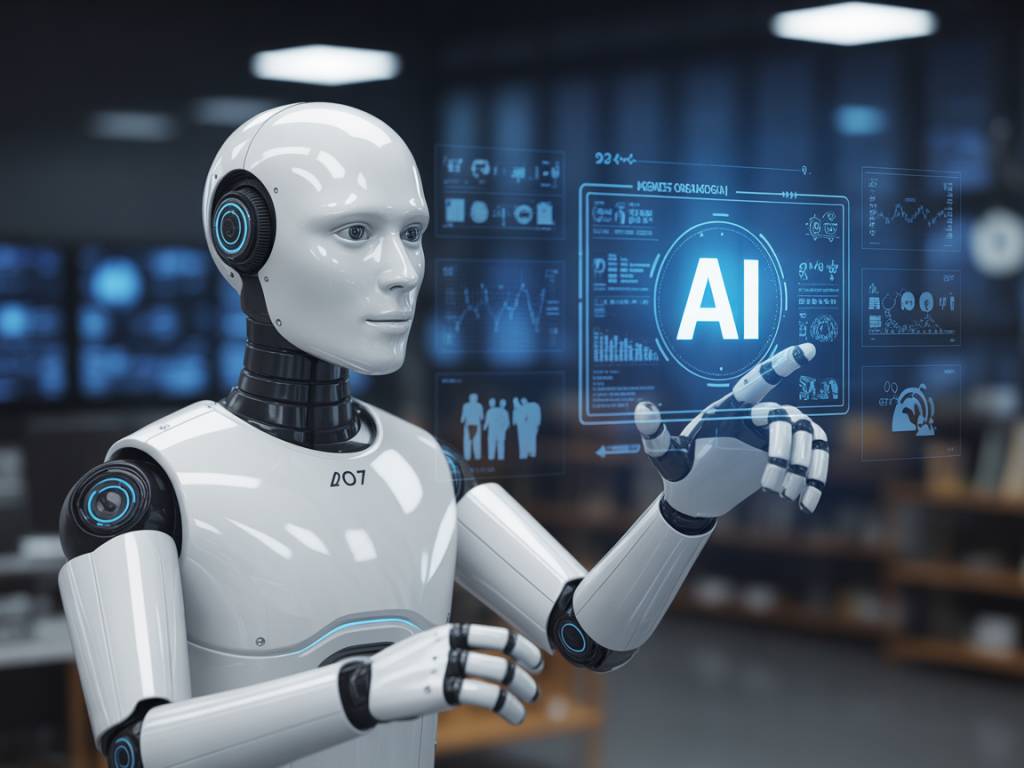
Artificial intelligence is moving from static tools to autonomous collaborators. By 2026, AI agents and workflow automation will no longer be experimental add-ons in digital marketing; they will underpin how campaigns are planned, executed and optimized across channels. For marketing leaders, this shift is less about replacing humans and more about redesigning processes, roles and performance metrics around continuous, machine-driven optimization.
From AI Tools to Autonomous Marketing Agents
Over the past few years, digital marketers have adopted a growing stack of AI-powered tools: predictive analytics in dashboards, recommendation engines in ecommerce, content generation assistants, and bidding algorithms in ad platforms. These systems have mostly functioned as isolated, semi-automated features.
AI agents take a different approach. Instead of optimizing a single step, an AI agent operates across an entire marketing workflow. It can observe data, decide on actions and execute them within predefined guardrails. In digital marketing, this means systems that can:
- Monitor performance across channels in real time
- Automatically trigger campaigns or experiments based on signals
- Generate and test creative variations autonomously
- Adjust budgets and bids according to business goals
- Report on outcomes and recommend next steps
By 2026, these agents will be integrated natively into major ad platforms, CRM suites, ecommerce solutions and customer data platforms (CDPs). The shift will take digital marketing from a calendar-driven discipline to a continuously adaptive, signal-driven system.
Why 2026 Is a Turning Point for Digital Marketing Automation
Several trends are converging to make 2026 a pivotal year for AI agents and workflow automation in marketing:
- Maturing generative AI models: Text, image and video generation are becoming more controllable and brand-safe, enabling AI agents not just to analyze data but also to produce on-brand assets at scale.
- Stronger marketing data infrastructure: The adoption of first-party data strategies, CDPs and clean rooms is giving AI agents access to richer, privacy-compliant user profiles and event streams.
- Platform-level automation: Google, Meta, Amazon and leading marketing clouds are quickly exposing orchestration APIs and agent frameworks, making cross-channel workflow automation more practical.
- Pressure on efficiency: As acquisition costs rise and economic conditions remain uncertain, marketing teams are under pressure to do more with less, accelerating the adoption of AI-driven automation.
- Regulatory clarity: By 2026, many markets will have clearer rules on AI transparency, data privacy and consent, giving brands more confidence to deploy automated systems at scale.
The result will be a marketing environment where AI agents are not experimental pilots but standard components of performance-oriented digital marketing strategies.
Core Use Cases for AI Agents in 2026
AI agents and workflow automation will touch nearly every aspect of digital marketing operations. Some of the most transformational use cases include:
Always-on campaign orchestration
Rather than building discrete campaigns with fixed start and end dates, teams will define goals, audiences, brand constraints and budget ranges. AI agents will then orchestrate campaigns continuously, automatically:
- Segmenting audiences based on behavior and propensity scores
- Selecting optimal channels and formats for each segment
- Refreshing creative assets in response to fatigue indicators
- Reallocating budget between campaigns and platforms in real time
Personalized content at scale
Generative AI will enable AI agents to produce and adapt content for micro-segments and even individuals, while adhering to style guides and legal guidelines. This will impact:
- Email and lifecycle marketing journeys
- Onsite experiences such as product recommendations and dynamic copy
- Paid ad creatives tailored to high-value segments
- Localized content for multiple regions and languages
Instead of creating single “master” assets, content teams will design templates, tone parameters and brand rules that agents use to generate variants.
Continuous experimentation and optimization
In 2026, A/B testing will look increasingly manual. AI agents will run multivariate experiments continuously, iterating through:
- Headline, copy and creative combinations
- Landing page layouts and messaging sequences
- Offer structures and pricing messages
- Channel mix and frequency caps
The role of human marketers will shift from setting up singular tests to defining experimentation policies and validating insights extracted by agents.
Automated reporting and insight generation
Reporting will move from manual dashboards to narrative-driven insight feeds. AI agents will:
- Summarize weekly performance in plain language
- Flag anomalies or emerging trends in customer behavior
- Explain drivers behind performance changes with supporting data
- Recommend specific actions, such as reallocating spend or revising targeting rules
Marketing leaders will spend less time collecting and formatting data, and more time evaluating AI-generated recommendations against strategic priorities.
Channel by Channel: How Digital Marketing Will Evolve
The rise of AI agents and workflow automation will not affect all digital channels equally. The impact will vary by discipline.
Search and SEO
In search, AI-driven search experiences and answer engines are already changing how users discover information. By 2026:
- SEO workflow automation will handle keyword clustering, content briefs and technical audits at scale.
- Agents will monitor search trends and automatically propose new content opportunities aligned with topical authority goals.
- Search performance will be measured less on individual keywords and more on share of visibility across AI-generated answer surfaces.
PPC and performance media
Paid media is primed for deeper automation. While smart bidding and responsive ads already exist, AI agents will extend automation to:
- Cross-platform budget planning based on marginal return analysis
- Dynamic creative optimization across video, display and search
- Real-time fraud detection and quality scoring of traffic sources
- Automated negotiation of programmatic deals within defined guardrails
Performance marketers will act as strategists and quality controllers, defining constraints and KPIs instead of manually pulling levers in each platform.
Email, CRM and lifecycle marketing
Lifecycle marketing is particularly well suited for workflow automation because it follows predictable sequences. By 2026:
- AI agents will design and maintain complex journey maps that adapt based on customer behavior, not just predefined triggers.
- Content and send times will be individualized at the user level to maximize engagement and lifetime value.
- Churn prediction models will automatically trigger win-back and reactivation flows.
Social media and community management
Social channels will see a blend of automated and human-driven interactions. AI agents will:
- Generate first-draft social posts tailored to each platform’s best practices
- Recommend posting schedules based on real engagement data
- Handle routine customer care inquiries, escalating only complex cases to human teams
- Surface user-generated content and trends for community managers to amplify
Brand voice governance will become a critical discipline, ensuring that AI-generated social content remains aligned with values and tone.
The New Skills and Roles in AI-Driven Marketing Teams
As workflow automation becomes embedded in digital marketing, team structures and skill sets will evolve. By 2026, marketing organizations are likely to see an increase in roles such as:
- Marketing AI strategists: Professionals who understand both marketing objectives and AI capabilities, responsible for designing how agents integrate into processes.
- AI operations managers: Specialists focused on maintaining, monitoring and fine-tuning AI agents, similar to DevOps roles in engineering.
- Data and experimentation leads: Experts who ensure test design quality, manage data governance and validate insights generated by automated systems.
- Brand and content governors: Roles dedicated to training AI models on voice, tone and compliance, and auditing outputs for quality.
Traditional skills like copywriting, media buying and CRM management will remain essential, but practitioners will increasingly collaborate with AI agents, focusing on strategy, creativity and oversight rather than repetitive execution.
Ethics, Transparency and Trust in Automated Marketing
As AI agents gain more autonomy, ethical and regulatory considerations will move to the forefront. Brands will need transparent policies on how automation is used in digital marketing, including:
- Clear consent and preferences management for personalized experiences
- Disclosure practices around AI-generated content where mandated
- Bias monitoring to ensure models do not discriminate against specific groups
- Guardrails that prevent AI agents from exploiting vulnerabilities or using manipulative tactics
Trust will become a competitive advantage. Consumers are likely to reward brands that offer personalized, AI-enhanced experiences while being transparent about data use and respectful of boundaries.
How Marketers Can Prepare Between Now and 2026
The transition to AI agents and workflow automation will not happen overnight. Digital marketing teams can use the coming years to build the foundations for a more autonomous future.
- Invest in data quality: Ensure tracking, attribution and first-party data collection are robust and privacy-compliant. AI agents are only as effective as the signals they receive.
- Map current workflows: Identify repetitive, rule-based tasks that are candidates for automation, such as reporting, basic optimizations and campaign setup.
- Run controlled pilots: Test AI-driven tools and agents in confined use cases with clear success metrics, then scale gradually.
- Develop internal AI literacy: Train marketers on how AI systems work, their limitations and appropriate oversight mechanisms.
- Update governance frameworks: Define policies, review processes and escalation paths for AI-driven decisions.
By approaching AI agents and workflow automation as strategic capabilities instead of tactical shortcuts, digital marketing leaders can shape a future where human creativity and machine efficiency reinforce each other. The organizations that thrive in 2026 will be those that treat AI not as a trend, but as a new operating system for marketing.